Did Michael Carrick Overachieve Before United’s Collapse?
Did Michael Carrick Overachieve Before Manchester United’s Collapse?
Introduction
Manchester United confirmed Michael Carrick’s dismissal after a dramatic decline in results. His tenure appeared promising at first, but the club’s form deteriorated so sharply that reports placed United in the Premier League relegation zone when the change was made. Source 1
That sequence raises a difficult question: did Carrick briefly outperform expectations before suffering an extraordinary slump, or did early results merely delay deeper problems at Old Trafford?
The answer requires more than judging him by his best or worst run. His opening period must be considered alongside United’s squad quality, financial resources, preseason expectations and underlying performances. The collapse must also be assessed in the context of recruitment, executive leadership, tactical continuity and squad balance.
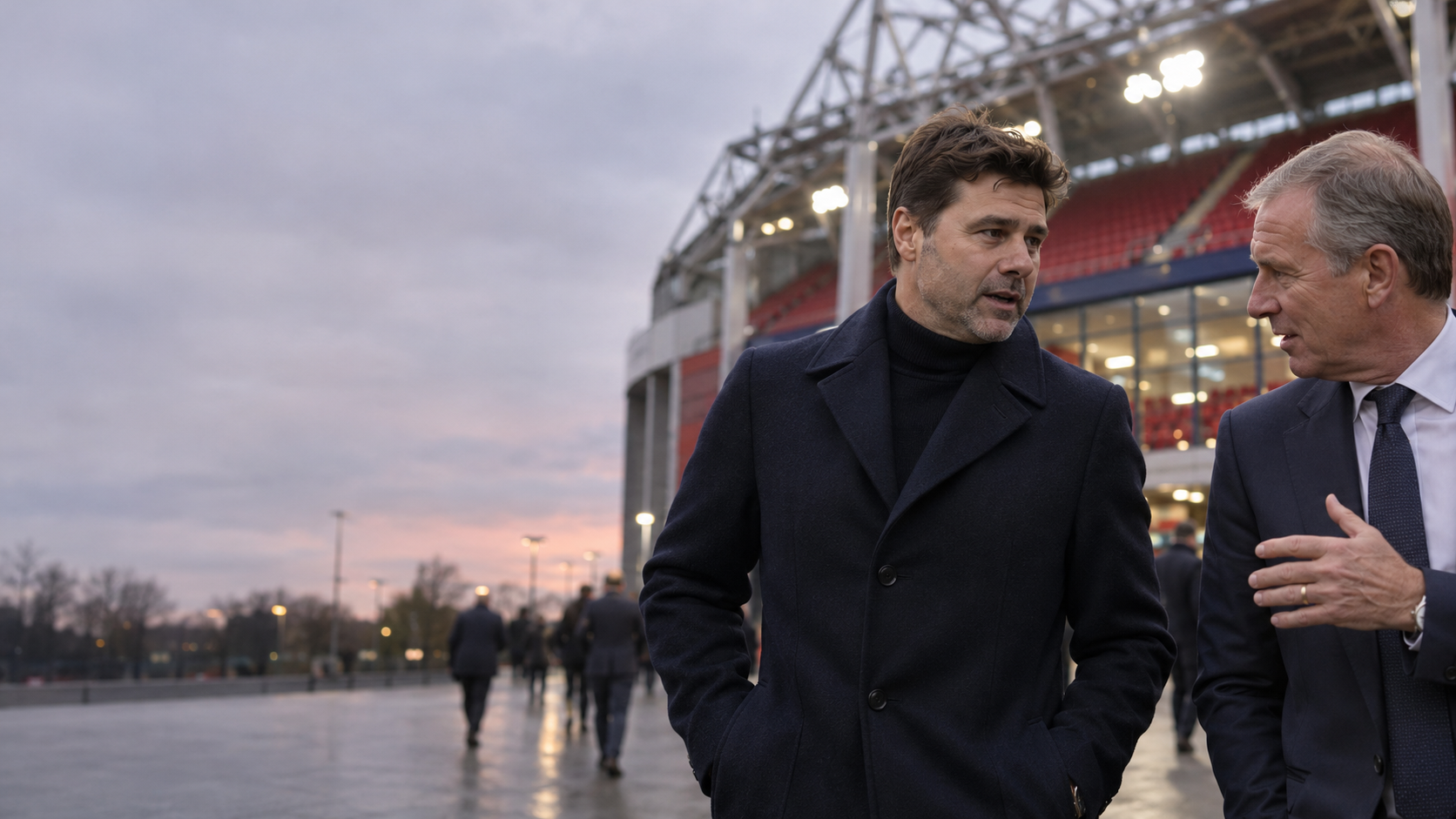
Reports said Mauricio Pochettino was preparing to replace Carrick. Unless supported by an official announcement, however, the appointment should be described as reported or expected. Source 5
Why Manchester United Dismissed Carrick
Manchester United dismissed Carrick after a sustained deterioration in performances. Available reports establish the central facts: Carrick was removed, the club was in severe league trouble, and preparations began for a new managerial appointment. Source 1
The Guardian reported that United dismissed Carrick while the team was in the Premier League relegation zone. Source 3
A temporary poor run can result from injuries, difficult fixtures or bad finishing. A prolonged collapse is different. It suggests that recurring weaknesses have not been solved and that the team is moving away from its objectives rather than temporarily falling short.
United’s reported relegation-zone position made the decision understandable. The club’s squad, wage bill and financial resources create expectations far above a relegation battle. Even if Carrick inherited structural problems, the board could reasonably conclude that a managerial change was necessary to prevent further damage.
Did Carrick Overachieve at the Start?
Carrick’s opportunity emerged during a period of managerial uncertainty. He was expected to restore confidence, simplify the team’s approach and deliver immediate results. Interim managers can benefit from a short-term lift because players often respond to a change in emphasis.
Early improvement could have resulted from clearer instructions, better morale, favorable fixtures, strong individual performances or greater stability after a turbulent period. Those factors can produce genuine progress without proving that a long-term project is ready to succeed.
A fair assessment would compare Carrick’s early record with the team’s form before his appointment. Relevant measures include points per match, goals scored and conceded, away results, performances against leading opponents, chance creation and the quality of chances allowed.
Context is essential. United possessed the resources and reputation of a major contender. If Carrick achieved results expected from the squad, that would represent improvement but not necessarily overachievement. Overachievement would require evidence that the team collected more points, created better chances or defeated stronger opponents than its underlying numbers suggested.
Without verified match data, the safest conclusion is that Carrick’s opening phase appeared positive but cannot be labelled a clear overachievement solely on the available reports.
Why the Early Results May Have Been Misleading
Short-term results can conceal weaknesses. Narrow victories, late goals, exceptional goalkeeping or opponents’ poor finishing can produce an attractive points total while the underlying performance remains fragile.
Fixture difficulty also matters. A run against struggling opponents may create optimism that disappears when the schedule becomes more demanding. Injuries and player availability can distort comparisons as well.
The decisive test was whether United could repeat its performances, control matches consistently and reduce its dependence on individual moments. The later collapse suggests that the initial progress was not stable enough.
How Manchester United Collapsed
The downturn became a crisis when United entered the reported relegation zone. Source 3
The broad sequence was:
- United showed early signs of improvement.
- Performances became less convincing.
- Results deteriorated and momentum disappeared.
- Confidence declined across the team.
- The club reached the reported relegation zone.
- Carrick was dismissed, with Pochettino reported as the expected successor.
Exact results, dates, goal difference and points totals require confirmation from a complete fixture record. The available source summaries do not support inventing those figures.
Tactical Problems
The decline should be assessed through several questions. Did United control midfield? Did the defensive line maintain appropriate spacing? Did the press operate as a coordinated unit? Could the team protect itself after losing possession? Did it create repeatable attacking patterns rather than rely on individual talent?
When confidence falls, tactical weaknesses become more visible. Midfield control can disappear, the defensive line can retreat too deeply and pressing can become disconnected. Attacks may also slow as players hesitate or avoid risk.
Carrick’s central challenge was to impose a repeatable identity. If United could not defend transitions, progress the ball or create high-quality chances consistently, early results were unlikely to last.
Squad Balance and Player Form
United’s problems cannot automatically be assigned to the manager. Player form, squad construction and leadership also influence results.
The balance between experienced players and younger talent can become difficult during a crisis. Experienced players may carry pressure but lack mobility, while younger players may offer energy without consistency. The team must also balance attacking ambition with defensive security.
Carrick may not have had sufficient authority to change the squad’s hierarchy. A manager can alter selection and tactics, but recruitment decisions and long-term squad planning often belong to executives and sporting departments. That distinction does not remove coaching responsibility, but it prevents an institutional problem from being reduced to one coach.
Was Carrick Responsible?
The Case Against Carrick
The case against Carrick rests on outcomes. He failed to stop the decline, could not maintain a consistent tactical identity and did not produce a recovery before United reached the reported relegation zone.
The board could also have concluded that recurring weaknesses were not being corrected. If the team conceded similar chances, lost midfield control and relied on isolated attacking moments, the manager had to answer for those patterns.
United’s decision was therefore understandable on sporting grounds. A major club cannot allow a severe decline to continue merely because the manager produced encouraging results earlier in the campaign.
The Case in Carrick’s Defense
Gary Neville criticised United’s treatment of Carrick as “disgusting,” according to Sky Sports. Source 5
Neville’s criticism focused on the instability surrounding Carrick’s role and departure. His argument reflects a wider defense: Carrick may have inherited a poorly balanced squad, damaged team culture, unrealistic expectations and limited time to implement lasting changes.
A manager can be responsible for results without being the sole cause of a crisis. Carrick’s authority, preparation and resources must be considered alongside the decisions that shaped the squad before he arrived.
Accountability means evaluating Carrick’s tactics, selections and results. Blame means assigning the entire crisis to him. United’s problems may also have involved recruitment, executive leadership, coaching continuity, player development and tactical inconsistency.
The balanced conclusion is that Carrick was accountable for failing to reverse the collapse, but he was not necessarily responsible for every condition that caused it.
Carrick Among United’s Post-Ferguson Managers
CBS Sports examined Manchester United’s managers since Sir Alex Ferguson, considering their records and impact at Old Trafford. Source 9
Relevant criteria include league performance, trophies, European results, squad development, longevity and tactical identity. Carrick’s short tenure makes direct comparison difficult. Managers who completed multiple seasons had more time to shape recruitment, develop players and establish a system.
A caretaker spell, a single season and a long-term rebuild are different assignments. Carrick had enough time to be judged on the collapse, but perhaps not enough time to be judged as a complete long-term manager. His final position was unacceptable, yet his overall potential cannot be measured from one unstable period alone.
What Manchester United Must Learn
A New Manager Cannot Fix Every Structural Problem
Replacing Carrick may change results, but it will not automatically resolve squad imbalance, recruitment failures, leadership problems or weak performance standards. Pochettino’s reported arrival should not be treated as a complete solution.
United Needs a Clear Tactical Identity
The club must define its preferred formation, pressing principles, build-up structure, defensive approach and required player profiles. A clear identity reduces dependence on individual moments and makes recruitment more coherent.
Recruitment and Coaching Must Align
The manager, sporting leadership, recruitment staff and academy must work from the same plan. Signing players for one system and replacing the manager with a coach who prefers another creates instability and wastes resources.
Final Verdict
Carrick’s tenure is best understood as a combination of short-term improvement, failed sustainability and difficult circumstances.
His early results may have exceeded expectations if they outperformed United’s underlying numbers and preseason projections. However, the subsequent slump was too severe to dismiss as bad luck. A reported relegation-zone position made dismissal understandable, especially for a club with United’s resources and ambitions. Source 3
Carrick should accept responsibility for failing to reverse the collapse, but he should not carry the full weight of United’s structural problems. His tenure was too short to establish a lasting project and too damaging at the end to be considered a success.
Pochettino’s success will depend on whether United changes its wider football structure, not only its manager.
FAQ
Why did Manchester United sack Michael Carrick?
Manchester United dismissed Carrick after a severe decline in results and league position. The Guardian reported that the club was in the Premier League relegation zone when the decision was made. Source 3
Did Michael Carrick initially overachieve?
He may have exceeded expectations early in his tenure, but that conclusion requires verified comparisons involving points per match, fixture difficulty, injuries, squad strength and underlying performance data.
How severe was the slump?
It was severe enough for United to reach the reported relegation zone and dismiss the manager. Exact results, goal difference and dates should be confirmed from a complete official record.
Was Carrick treated unfairly?
Gary Neville described United’s treatment of Carrick as “disgusting,” according to Sky Sports. Source 5 His criticism concerned the instability surrounding Carrick’s role and departure, but the team’s results must also be considered.
Was Mauricio Pochettino confirmed as Carrick’s replacement?
Reports said Pochettino was preparing to take over at Manchester United. Source 7 Unless the club officially confirms the appointment, it should be described as expected or reported.
Where does Carrick rank among United’s post-Ferguson managers?
His position is difficult to assess because his tenure was shorter than those of several predecessors. Comparisons should consider league results, trophies, European performance, tactical impact and duration rather than reputation alone. CBS Sports provides a broader assessment of United’s post-Ferguson managers. Source 9
Artikel Terkait
-
 2026 Midseason All-Pro Team: Burrow, Sewell and More
-
 Kirk Cousins to Wear No. 8 Again for Vikings
-
 Rockets Beat Warriors as Curry Exits and Smart Is Ejected
-
 Man United Hope to Finalize Pochettino Deal Thursday
-
 Cain Velasquez Compares Josh Hokit to Conor McGregor
-
 2027 NFL Mock Draft: Smith to Chargers, Mestemaker to Dolphins