Scientists Probe a Mysterious Object’s Acceleration
Scientists Probe a Mysterious Object’s Acceleration
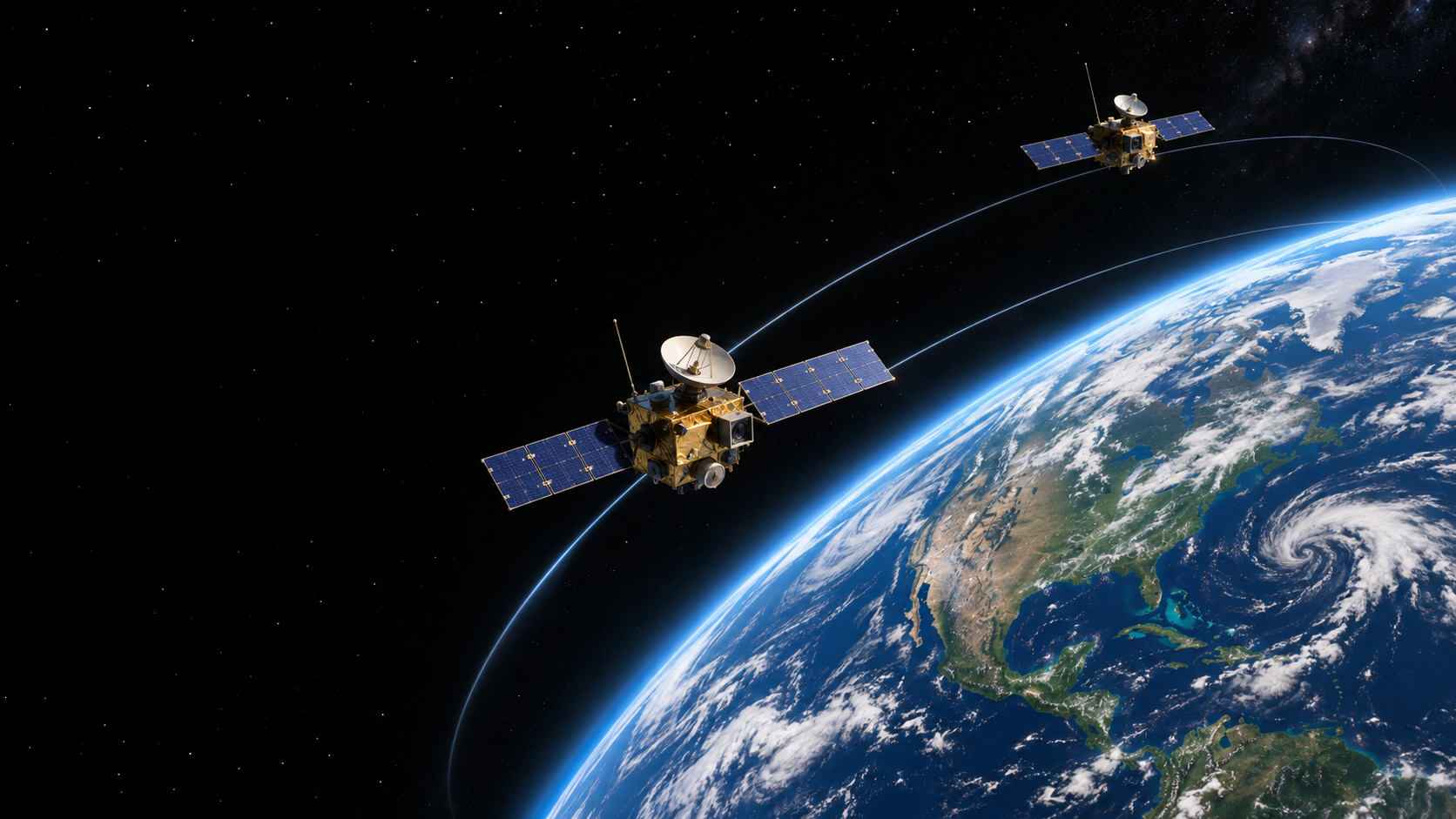
Scientists are investigating a mysterious object whose apparent acceleration does not yet have a complete explanation. At the same time, a Japanese spacecraft is reportedly attempting to intercept or closely observe it, creating a rare opportunity to study the object directly.
The mystery is not that the object is moving. Every object in space changes speed or direction under the influence of gravity and other forces. The question is whether the observed motion can be explained by known physical effects. According to the available report, researchers remain uncertain about why the object’s acceleration appears to be increasing while a Japanese spacecraft pursues it. Source 1
Several important details remain unconfirmed in the available source summary. The object’s official designation, classification, acceleration measurements, mission name, spacecraft identity and encounter schedule require verification through original mission documentation or statements from scientists.
That uncertainty matters. An unexplained acceleration does not automatically indicate an artificial object or an extraordinary phenomenon. Possible explanations include gravity, escaping gas, solar radiation pressure, fragmentation, measurement errors and an incomplete orbital model. A spacecraft encounter could provide the evidence needed to distinguish among these possibilities.
What Is the Mysterious Object?
The available report describes an object whose motion is attracting scientific attention while a Japanese spacecraft attempts to reach it. It does not establish the object’s official name, size, composition, origin or classification. It is therefore not possible to state responsibly whether the target is an asteroid, comet, interstellar visitor, space debris or an artificial object.
Scientists normally begin with repeated position measurements. Telescopes record where the object appears against background stars. Researchers combine those observations with estimates of its velocity and the gravitational influence of the Sun, planets and other bodies. They then calculate a predicted orbit and compare future observations with that model.
A difference between the calculated and observed positions does not immediately identify the cause. The discrepancy may result from inaccurate measurements, an incomplete data set, an incorrect orbital assumption or a genuine force that has not been included in the model.
The report confirms the central puzzle: researchers are investigating an apparent increase in acceleration. It does not, by itself, confirm the object’s category or prove that its motion violates known physics.
Why the Motion Has Raised Questions
Acceleration describes a change in velocity, and velocity includes both speed and direction. An object accelerates when it moves faster, slows down or changes direction. A spacecraft changing course near a planet and a comet curving around the Sun are both accelerating.
The unusual feature is the possibility that known gravitational forces do not fully account for the object’s measured trajectory. Researchers may have expected the object to follow one path but observed it drifting from that prediction. If the deviation grows over time, scientists must determine whether an overlooked force is acting on the object.
Potential causes include:
- Gravity from the Sun or a nearby planet
- Gas escaping from an icy surface
- Solar radiation pressure
- Dust release or fragmentation
- Electromagnetic or plasma interactions
- Measurement uncertainty
- An incomplete orbital model
The phrase “unexplained acceleration” means that the current explanation is incomplete. It does not mean that scientists have identified an exotic cause.
Orbital Predictions and Residuals
Scientists calculate orbital predictions using the object’s measured position, estimated velocity and the gravitational effects of known bodies. They then compare new observations with the predicted position. The difference is often called an orbital residual.
A small residual may fall within expected measurement uncertainty. A growing or systematic residual may suggest that the model is missing a force. However, a reliable explanation must account for the full observation record rather than explain only one unusual measurement.
Researchers may need to consider several possibilities:
- Measurement uncertainty: The object may be faint, distant or difficult to distinguish from background sources.
- Incomplete observations: A short observation period may produce an unreliable orbit.
- Incorrect assumptions: The object’s position, velocity or physical properties may have been estimated incorrectly.
- An incomplete gravitational model: A relevant body or interaction may not have been fully considered.
- A genuine non-gravitational force: Gas, dust, sunlight or another process may be altering the motion.
Repeated observations from different instruments and observatories can help separate random error from a persistent pattern.
Possible Explanations
Gravitational Influences
Gravity is the first explanation scientists examine. The Sun and planets exert forces that alter the trajectories of smaller bodies. A close planetary passage can change an object’s speed and direction, while a close approach to the Sun can produce a particularly large change.
Gravitational motion is comparatively predictable. Once scientists know the positions and masses of the relevant bodies, they can calculate the expected effect using established physical laws. A gravitational explanation would need to match the object’s measured trajectory across multiple observations.
The available report does not provide enough verified orbital data to identify a specific planetary or solar encounter. Claims about a particular gravitational interaction should wait until the object’s trajectory and mission records are available.
Outgassing From a Comet-Like Body
Outgassing is a conventional explanation for non-gravitational motion in an icy object. When sunlight heats material beneath a comet-like surface, ice can change directly into gas. The gas escapes through cracks, vents or active regions. If it leaves preferentially from one part of the object, it produces a small reaction force, similar to thrust from a weak rocket engine.
That force can alter an object’s speed and trajectory. It may be difficult to model because activity can vary across a rotating body. Surface cracks may open or close, and activity may increase as the object approaches the Sun.
An object can release gas without producing an obvious bright coma or long tail. If the activity is weak, distant or directed away from Earth, telescopes may not detect it clearly. Scientists would need evidence of gas, dust, surface activity or a trajectory pattern consistent with jets before treating outgassing as the leading explanation.
Solar Radiation Pressure
Sunlight carries momentum and can exert pressure on an object. The effect is usually tiny for dense natural bodies but can become significant when an object has a large surface area compared with its mass.
A thin, reflective or lightweight structure would experience stronger acceleration than a compact, heavy object of the same visible size. Testing this possibility requires estimates of the object’s size, mass, shape, reflectivity and composition. Brightness alone may not provide those values because a small reflective object can resemble a larger, darker one.
Researchers must show that the predicted force matches both the magnitude and direction of the measured acceleration before identifying radiation pressure as the cause.
Fragmentation and Other Effects
Other possibilities include fragmentation, dust release, uneven thermal emission, magnetic interactions and plasma effects. An object that breaks apart may experience a sudden change in its trajectory. Dust leaving the surface can create a small recoil force, while uneven heat emission can produce weak thrust.
The target could also be uncatalogued debris or another artificial object. Unusual movement, however, does not establish an artificial origin. Natural forces, measurement errors and incomplete models must be tested first.
The Japanese Spacecraft Pursuing the Object
The available source summary refers to a Japanese spacecraft attempting to intercept the object but does not identify the spacecraft, mission designation, operator or encounter date. Those details require confirmation from official mission documentation.
An interception does not necessarily mean a landing. The spacecraft may fly past the object at high speed, enter orbit, photograph it from a distance or collect particles and gas during a close approach. The mission may also rely on remote tracking rather than physical contact.
Possible instruments include:
- Cameras for imaging the object’s shape and surface
- Spectrometers for chemical analysis
- Dust detectors
- Gas sensors
- Radio systems for tracking
- Instruments measuring magnetic, thermal or electrical conditions
The spacecraft may need to adjust its course repeatedly as ground-based observations improve the target’s orbit. An unexpected acceleration can change those estimates and increase the difficulty of navigation.
Why Reaching the Object Is Difficult
A spacecraft cannot simply point toward a moving object and travel in a straight line. It must match the target’s position, velocity, direction and orbital plane at the time of encounter.
The trajectory must account for the motion of the Sun, planets and target. A small error early in the mission can become a large positional difference later. Limited fuel restricts course changes, while communication delays prevent mission controllers from responding instantly.
Other constraints include:
- Narrow windows for trajectory corrections
- Uncertainty in the target’s orbit
- Limited power and fuel
- Delays in receiving observations
- Changing estimates of the object’s acceleration
- The spacecraft’s instrument and navigation limits
A flyby can be successful even if the spacecraft does not stop beside the object. The goal may be to pass close enough to collect useful images and measurements.
What a Close Encounter Could Reveal
A spacecraft encounter could provide evidence unavailable through remote observations. Important measurements could include:
- High-resolution images
- Surface shape and structure
- Rotation rate
- Mass and density estimates
- Chemical composition
- Dust and gas activity
- Evidence of fragmentation
- Magnetic or electrical behavior
- Thermal properties
Visible jets would support an outgassing explanation. A low-density object with a large surface area could make radiation pressure more plausible. Images showing fragments could explain a sudden change in motion. A solid, inactive body would make some comet-like explanations less likely.
Mass is especially important. The same force produces different acceleration depending on an object’s mass. A small force may significantly affect a lightweight body but have little effect on a dense asteroid.
A close spacecraft can observe the target from changing angles and at much shorter range. It may determine the object’s shape, rotation and surface activity directly. Even a brief flyby could improve estimates of size, composition and mass.
Evidence Versus Speculation
There is a major difference between saying that scientists detected unexplained acceleration and saying that scientists know what caused it. The first statement describes an observation and the current limits of the model. The second requires evidence.
Until the object’s physical properties and trajectory are better measured, researchers should describe possible causes as hypotheses. Unusual behavior does not prove that an object is artificial or connected to extraterrestrial technology. Extraordinary claims require measurements that rule out conventional explanations and support the proposed alternative.
A convincing explanation should:
- Match the object’s measured trajectory.
- Remain consistent across independent observations.
- Fit the object’s size, shape and composition.
- Predict future motion accurately.
- Avoid unsupported assumptions.
The preferred explanation is not necessarily the most dramatic. It is the model that accounts for the evidence with the fewest unresolved problems.
What Happens Next?
Researchers will continue tracking the object and refining its orbit. New observations should improve estimates of its position, velocity and acceleration. Mission planners can then update the Japanese spacecraft’s navigation plan if the reported interception effort remains feasible.
The expected process is:
- Continue observing the object.
- Refine its orbital model.
- Update the spacecraft’s trajectory.
- Gather data during the encounter, if achieved.
- Compare observations with gravitational and non-gravitational models.
- Publish the results for independent scientific review.
The mystery may not be resolved by a single observation. Scientists could need months or years of measurements to determine whether the acceleration is caused by gas, sunlight, fragmentation, gravity or another effect.
Pursuing unusual objects has value even when the explanation is conventional. These targets test orbital models, improve spacecraft navigation and reveal where current observations remain incomplete.
FAQ
Why is the mysterious object accelerating?
The available report confirms that scientists are investigating an apparent increase in acceleration but does not establish its cause. Possible explanations include gravity, outgassing, solar radiation pressure, fragmentation, dust release or measurement uncertainty.
Is the object an asteroid or a comet?
The available source does not identify its classification. Researchers must determine whether it is an inactive asteroid, an icy comet-like body, an interstellar visitor, debris or another type of object.
What Japanese spacecraft is trying to reach it?
The source summary refers to a Japanese spacecraft but does not provide its name or mission designation. Its identity should be confirmed through official mission documentation before publication.
Can a spacecraft change course to catch a fast-moving object?
Yes. A spacecraft can perform trajectory-correction maneuvers using its propulsion system. Mission planners calculate the target’s predicted path and adjust the spacecraft’s speed and direction. Unexpected acceleration makes those calculations more uncertain and may require additional corrections.
Does unexplained acceleration suggest alien technology?
No. Unexplained motion means that scientists do not yet have a complete explanation. Natural forces, measurement errors and incomplete orbital models must be evaluated before artificial explanations are considered.
What could a spacecraft learn during an encounter?
A close encounter could provide images and measurements of the object’s shape, rotation, surface, composition, dust, gas and surrounding environment. Those data could help determine whether outgassing, radiation pressure, fragmentation, gravity or another force is responsible.