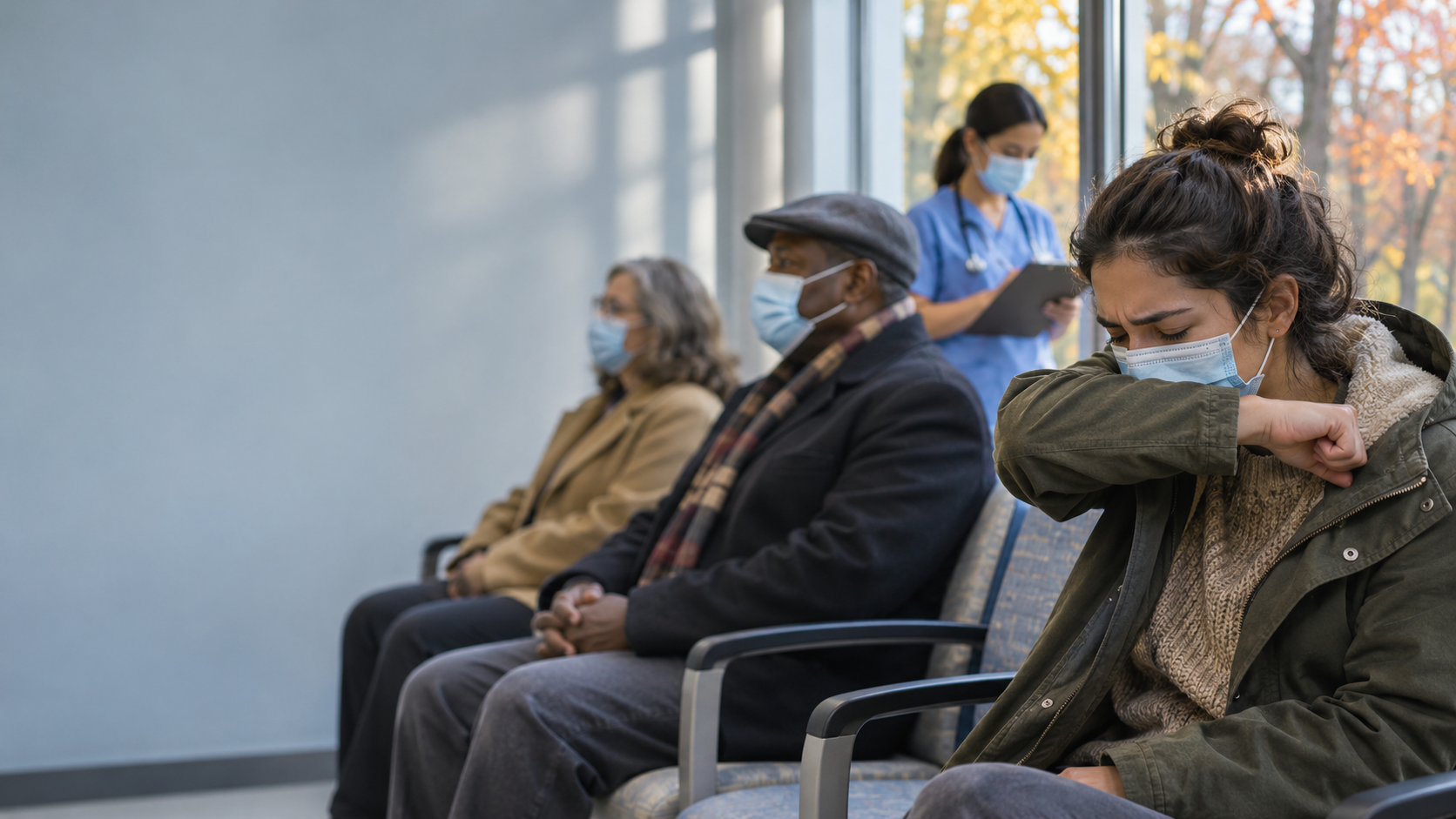
Which Flu Strain Is Driving This Early Season?
Which Flu Strain Is Driving This Early Season?
Influenza activity appears to be starting earlier than expected in several reports, raising a central question: which flu strain is contributing to the unusually early spread?
The available reporting links this season’s early activity to a specific influenza strain. However, the supplied summary of the USA Today report does not identify the strain, subtype, or lineage. The original report and current laboratory surveillance must be reviewed before the virus is identified as influenza A or B, H1N1, H3N2, or another lineage. Inferring a subtype from headlines, symptoms, or regional reports would be inaccurate. Source 1
Early circulation does not automatically mean that a virus causes more severe illness. Timing, transmission, population immunity, indoor behavior, weather, testing, and surveillance practices can all affect when flu activity becomes visible.
What the Available Reporting Says
A report cited in the supplied material connects an influenza strain with unusually early spread, but the summary does not name the strain or provide its subtype or lineage. That distinction matters because reports may refer to:
- A strain dominant in current surveillance.
- A familiar seasonal strain appearing earlier than usual.
- A newly detected genetic group.
- A virus receiving media attention despite limited evidence that it causes most infections.
- A strain with genetic or antigenic changes that affect immune recognition.
These descriptions are not interchangeable. A virus detected in laboratory surveillance is not necessarily responsible for the largest number of cases nationwide. One strain may dominate in a particular region while another circulates elsewhere.
Regional reports also require caution. FOX 13 Seattle described an unusually early flu surge in Western Washington, but regional activity does not prove a uniform national pattern. Source 7
How Flu Strains Are Classified
Influenza viruses are classified at several levels:
- Type: The main human seasonal viruses are influenza A and influenza B.
- Subtype: Influenza A viruses may be identified by surface proteins, such as H1N1 or H3N2.
- Lineage or genetic group: Viruses can be divided into genetic groups that help scientists track evolution.
- Strain or variant designation: Laboratories may use more specific names based on genetic sequencing and antigenic testing.
Public reports may use different labels for the same virus. Laboratory surveillance provides more reliable identification than symptoms, social media posts, or anecdotal reports.
A strain’s name also does not predict an individual’s outcome. Age, pregnancy, immune status, underlying conditions, vaccination, previous infection, and access to treatment all affect complication risk.
Why Flu Activity May Have Started Early
Community transmission
Flu spreads through respiratory particles and droplets released when infected people cough, sneeze, speak, or breathe. Transmission can accelerate in crowded indoor settings, including schools, workplaces, public transportation, airports, nursing homes, and households.
Children may contribute to transmission because they have frequent close contact in classrooms and activities, and some may have limited prior exposure to a circulating strain.
The early activity reported in Western Washington indicates an early regional surge, not proof that every part of the country is experiencing the same pattern. National conclusions require data from multiple regions and surveillance systems.
Population immunity
Protection against influenza varies between individuals and changes over time. Vaccination and previous infection may provide partial protection, but immunity can be weaker against a substantially changed virus or may decline over time.
The supplied summaries do not establish that population immunity is unusually low this season. That claim requires current surveillance data. Vaccination remains important because it can reduce the risk of severe illness, hospitalization, and death even when infection occurs.
Weather and indoor behavior
Cooler weather often leads people to spend more time indoors with less ventilation. Dry indoor air may also affect respiratory droplets and the protective function of the nose and airways.
Weather alone does not determine the start of flu season. Timing reflects the interaction of environmental conditions, contact patterns, immunity, and the biological characteristics of circulating viruses.
Testing and surveillance
Increased testing can make influenza activity appear earlier or more widespread because more infections are identified. Public-health agencies may monitor:
- Clinical laboratory results.
- Emergency department visits.
- Outpatient visits for respiratory illness.
- Hospital admissions.
- Death certificates.
- Genetic sequencing and strain monitoring.
- Wastewater or syndromic indicators, where available.
Each system measures something different. One indicator should not be treated as a complete national picture.
Is This a “Super Flu”?
“Super flu” is not a recognized medical diagnosis or scientific classification. The phrase usually reflects concern about high case numbers, early spread, or severe individual cases. STAT has reported that it does not describe a distinct medical phenomenon. Source 5
High case numbers do not prove that a virus is unusually powerful. Early spread does not prove increased severity, and severe illness in some patients does not establish that a strain causes severe disease in most people.
Researchers evaluate several separate characteristics:
- Transmission: How efficiently the virus spreads.
- Immune recognition: Whether antibodies and immune defenses recognize it.
- Vaccine match: How closely vaccine viruses resemble circulating viruses.
- Severity: Hospitalization, intensive-care, and mortality rates compared with previous seasons.
- Antiviral susceptibility: Whether recommended antiviral medicines remain effective.
- Genetic and antigenic changes: Whether mutations alter viral behavior or immune recognition.
Transmissibility and severity are different measurements. A virus can spread widely without causing more severe disease.
Symptoms and Warning Signs
Common flu symptoms include fever or chills, cough, sore throat, muscle or body aches, headache, fatigue, and a runny or congested nose. Vomiting or diarrhea can occur, particularly in some children.
Flu often begins suddenly, but symptoms vary. Symptoms overlap with COVID-19, respiratory syncytial virus, and common colds. Symptoms alone cannot identify the influenza strain or reliably distinguish one respiratory infection from another.
Seek urgent medical evaluation for:
- Trouble breathing or shortness of breath.
- Chest pain or pressure.
- Confusion or difficulty waking.
- Severe weakness or inability to stand.
- Signs of dehydration, such as very little urination.
- Symptoms that improve and then worsen.
- Blue, gray, or pale skin, lips, or nail beds, especially in children.
- Severe or rapidly worsening symptoms.
People at higher risk of complications should contact a healthcare professional promptly, even if symptoms initially appear mild.
Who Faces the Greatest Risk?
Higher-risk groups include:
- Adults aged 65 and older.
- Children younger than 5, especially those younger than 2.
- Pregnant people.
- People with asthma, diabetes, heart disease, or chronic lung disease.
- People with weakened immune systems.
- Residents of nursing homes and long-term-care facilities.
Early circulation extends the period during which vulnerable people may be exposed. It can also increase pressure on hospitals, urgent-care centers, and primary-care offices. Early activity does not necessarily mean that the season will be more severe overall, but prevention should begin promptly.
Flu Vaccine Protection
Flu vaccine protection is not all-or-nothing. It varies with age, immune status, underlying health conditions, time since vaccination, vaccine-virus match, and the specific virus circulating in the community.
A vaccinated person can still develop influenza, but vaccination may reduce the likelihood of serious complications. Flu seasons can last for months, and different viruses may circulate at different times. Follow current recommendations rather than assuming that early cases make vaccination pointless.
People with questions about age, pregnancy, allergies, or medical history should consult a healthcare professional.
Ways to Reduce Transmission
- Avoid close contact with people who are sick when possible.
- Improve ventilation in crowded indoor spaces.
- Consider a well-fitting mask in high-risk settings or during intense community transmission.
- Stay home when sick and follow current public-health guidance before resuming normal activities.
- Wash hands with soap and water or use alcohol-based sanitizer.
- Cover coughs and sneezes with a tissue or elbow.
- Avoid touching the eyes, nose, and mouth.
- Clean frequently touched surfaces when someone in the household is ill.
- Limit contact between sick household members and people at higher risk.
Antiviral Treatment
People at higher risk, those with severe symptoms, and those whose illness is worsening should contact a healthcare professional promptly. This includes pregnant people, young children, and older adults.
Prescription antiviral treatment is generally most useful when started early, according to clinical guidance. Treatment decisions depend on age, symptoms, underlying conditions, test results, and local recommendations. Clinicians may recommend treatment based on symptoms and risk factors even when a rapid test is negative, because rapid tests do not always detect influenza.
Do not start prescription medication without professional evaluation.
What the Evidence Does—and Does Not—Show
The supplied material supports the following conclusions:
- Source 1 links an unidentified influenza strain with unusually early spread.
- Source 3 reports an early flu season and provides prevention guidance. Source 3
- Source 5 states that “super flu” is not a recognized medical phenomenon.
- Source 7 describes an unusually early flu surge in Western Washington.
- Source 9 describes increasing influenza cases and concerns about changing seasonal patterns. Source 9
The supplied summaries do not provide the strain’s name, national case totals, hospitalization rates, vaccine-effectiveness estimates, or detailed laboratory surveillance. Several sources also lack publication dates. Sources 2, 4, 6, 8, and 10 contain unrelated titles or figures and should not support strain-specific or national claims.
Conclusion
The available material links an unidentified influenza strain with this season’s early spread, but the supplied summary does not provide enough information to name the strain responsibly. Early activity can reflect contact patterns, immunity, indoor behavior, environmental conditions, testing, and surveillance practices.
“Super flu” is not a medical diagnosis. Scientists assess transmission, severity, immune recognition, vaccine match, genetic change, and antiviral susceptibility instead.
Follow local health guidance, stay home when sick, improve indoor ventilation, consider vaccination, and contact a healthcare professional promptly when symptoms are severe or risk factors are present.
Frequently Asked Questions
What flu strain is driving this season’s unusually early spread?
The supplied summary says that a specific influenza strain is linked to early spread, but it does not name the virus, subtype, or lineage. The original USA Today report and current laboratory surveillance must be checked before identifying it.
Is this season’s flu strain more dangerous than usual?
Early or widespread circulation does not prove greater severity. Researchers rely on hospitalization, intensive-care, and mortality data rather than media attention alone.
Is “super flu” a real medical term?
No. “Super flu” is not a recognized scientific diagnosis. Experts assess spread, severity, immune recognition, vaccine match, and antiviral susceptibility instead.
Can the flu vaccine still help if cases are increasing?
Yes. Flu season can continue for months, and vaccination may reduce infection risk and severe outcomes. Protection takes time to develop and varies by person and strain.
How can people distinguish flu from COVID-19 or a cold?
The illnesses share many symptoms, including cough, fatigue, sore throat, and fever. Symptoms alone cannot reliably identify the infection or strain. Testing and professional medical advice can help when treatment or isolation decisions depend on the result.
When should someone seek medical care?
Seek prompt care for high-risk patients, severe symptoms, or worsening illness. Warning signs include difficulty breathing, chest pain, confusion, dehydration, severe weakness, and symptoms that improve before worsening.